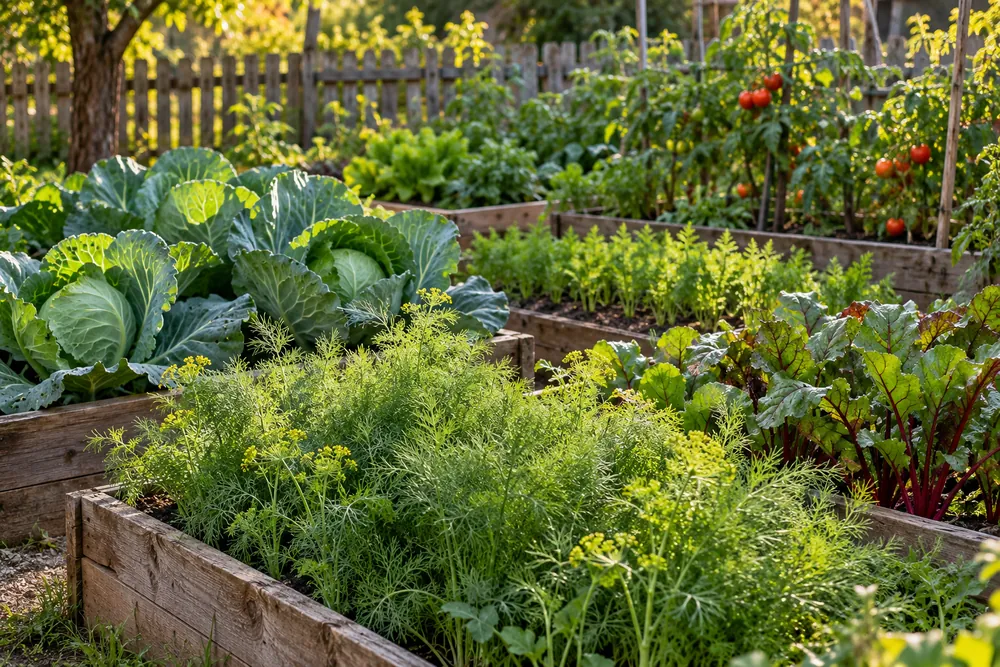
A kitchen garden can begin with a meal you want to make. Think of a herb you reach for often, a leaf you like in a salad and one crop you would enjoy watching develop. Three containers are enough for a first experiment, provided each plant has the space and conditions it needs.
French garden publication Gerbeaud’s guide to a potager en pot explores vegetables suited to small spaces, from leaves and radishes to compact fruiting crops. Its appeal is partly visual: food plants can be the garden’s decoration as well as its harvest. Treat the selection as inspiration, then choose varieties suited to your own growing conditions.
University of Minnesota Extension supplies useful practical foundations. Its small-space container guide emphasizes drainage holes and a suitable potting mix rather than ordinary garden soil. It also recommends approachable plants such as herbs, lettuce and cherry tomatoes. The right combination still depends on the sun, container size and season available at your home.
Our suggested design is deliberately flexible. Put frequently picked herbs where they are easy to reach, give each crop room to grow and make watering convenient enough to become a habit. Check the pots instead of assuming a fixed schedule will suit every day. A warm, windy balcony and a sheltered cool patio are different growing sites.
At the end of the season, judge the garden by what reached the kitchen and what you enjoyed tending. Perhaps the herb earned another pot while the tomato asked for more sun than you could offer. That is useful information. Keep the local observations and change one thing next season; a modest garden becomes more productive when its design follows experience.