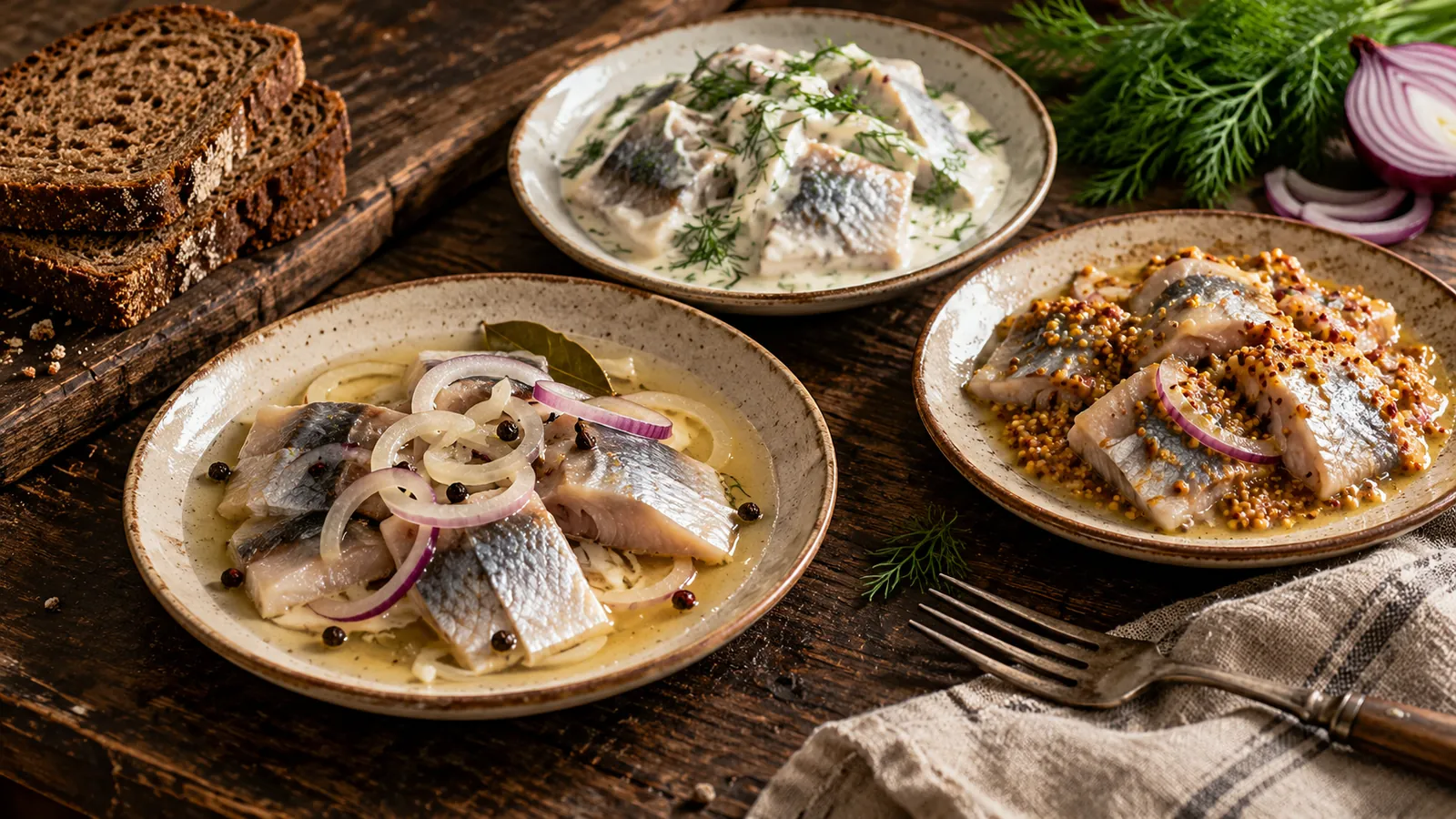
Put herring, potatoes and bread on the table and there is already the outline of a generous lunch. The interesting part comes when the names and accompaniments change. Nordic traditions offer several ways to explore that pleasure without turning a simple meal into a performance.
Sweden’s Nordiska museet places herring, potatoes and strawberries among the foods associated with Midsummer. Its account also shows that the familiar holiday table has a history: customs take shape over time. That makes the museum a useful antidote to the idea that every traditional meal arrived as one ancient, unchanging package.
In Norway, Godfisk’s sursild recipe presents another direction: herring with a spiced vinegar mixture and onion. The Norwegian Seafood Council’s page is a window onto the dish’s flavour vocabulary, including allspice, clove and mustard seed. Read its ingredient specification carefully; a recipe built around prepared herring should never be applied casually to raw fish.
Denmark supplies a communal setting in Hvide Sande. The town’s Sildefestival describes the spring movement of herring through the sluice toward Ringkøbing Fjord and a celebration supported by local associations and volunteers. Fishing and food belong to the same story there. Check the organizer’s current programme before planning a visit, because event pages can retain material from earlier years.
At home, borrow the spirit of a shared table. Offer two ready-to-eat herring styles in small dishes, put potatoes in the middle and let diners choose their own proportions. Label any mustard, dairy or egg additions. Our suggestion is to start with restrained garnishes, then add a new element only when you can still taste the fish beneath it.