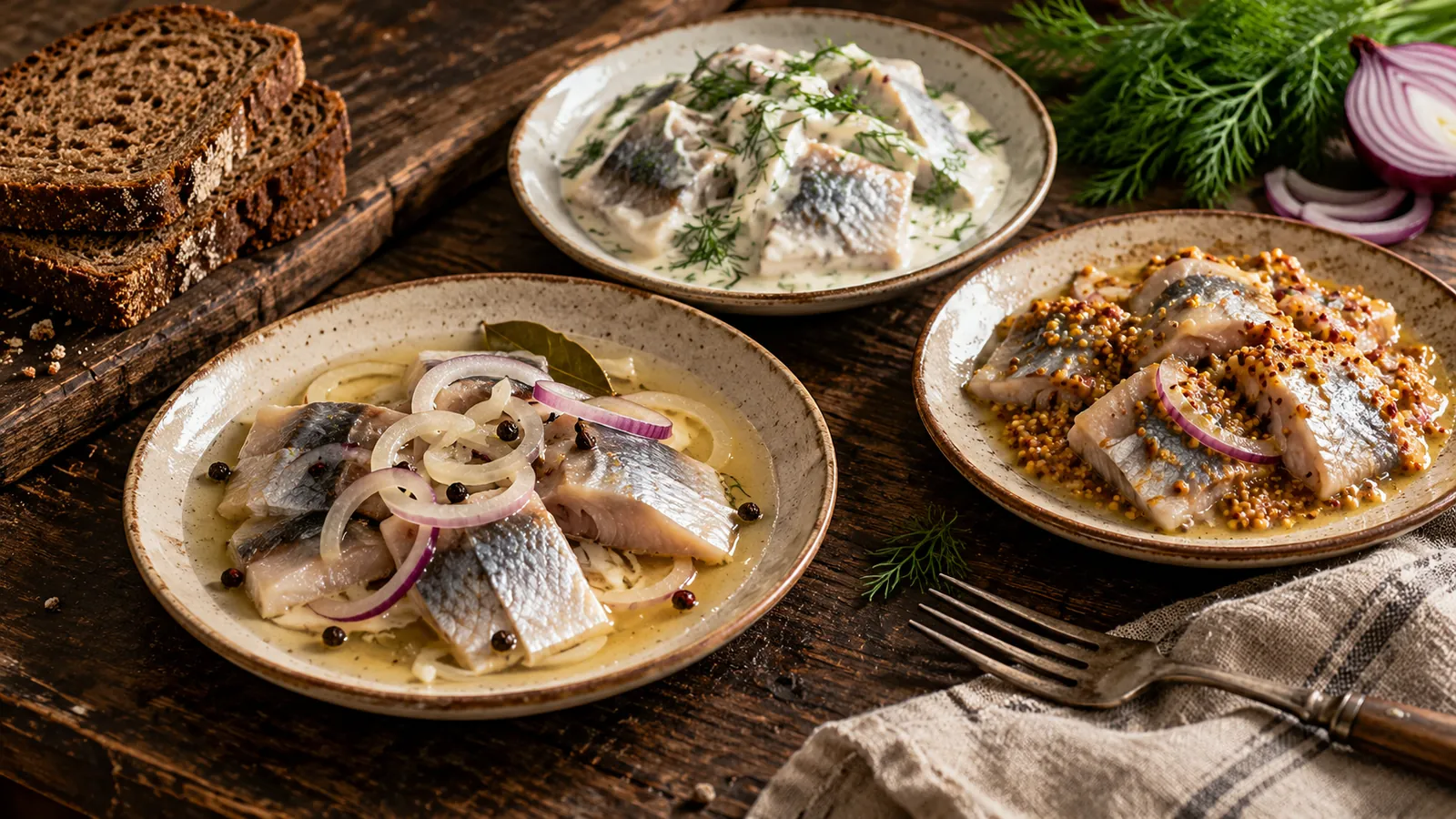
The most useful question at a herring counter is often “How has this been prepared?” A silky salted fillet, a firm vinegar-marinated piece and a spoonful of creamy herring salad can offer strikingly different experiences. The familiar silver fish becomes a whole collection of foods through the work of the producer.
The Nederlands Visbureau explains Hollandse Nieuwe through a specific Dutch processing tradition that includes salting and controlled maturation. The fish may be caught and processed in Scandinavia, so the name describes more than a point on a fishing map. It is a good reason to read the full product label instead of inferring everything from a flag.
Germany’s Fisch-Informationszentrum identifies Matjes, Rollmops and Bismarckhering among the familiar preparations of herring. Treat those names as useful starting points for a conversation with the seller. Ask about the cure, the marinade, any sauce and the intended serving. Products with a similar appearance can be seasoned or processed quite differently.
For a Polish coastal perspective, the traditional-food register’s account of Kashubian herring salad describes a broad repertoire: salted, smoked, fried, marinated and dressed fish. It also records herring with cream or vinegar and onion beside potatoes cooked in their skins. That combination gives the fish a quiet, substantial setting.
Our tasting suggestion is to choose three small portions of commercially prepared, ready-to-eat herring and serve them separately with plain bread and potatoes. Keep the labels. Compare salt, sweetness, acidity and texture before reaching for more garnish. If you want to pickle fish yourself, use a complete university procedure; the flavour descriptions here are a map for exploration, not a curing formula.