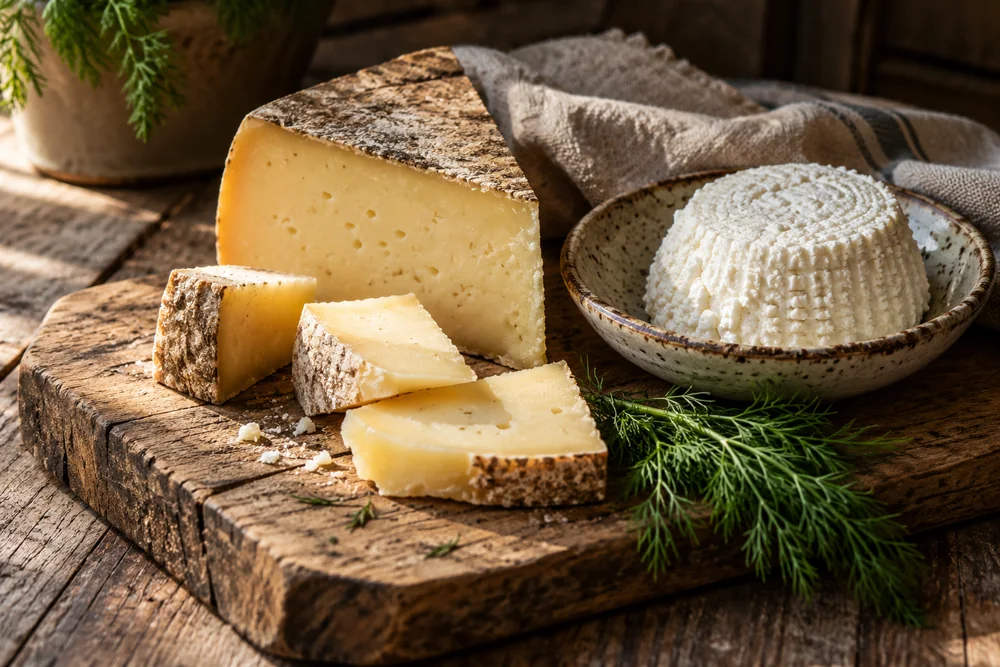
A plain fresh cheese can be the beginning of breakfast, a savoury spread or a warm pan of something sweet. Its quiet appearance hides an important practical detail: texture matters. Before adapting a family recipe to a North American grocery shelf, look at how firm, smooth or moist the cheese actually is.
Poland’s traditional-food register describes a twaróg associated with Głuchów as a cow’s-milk cheese sold in block or wedge forms. Its account connects the product with local dairying and the handling of the curd. It is a particular regional example that makes the broad English phrase “fresh cheese” feel much less anonymous.
For a Ukrainian kitchen application, Yevhen Klopotenko’s syrnyky with apples and cinnamon draws attention to the condition of the curd. His notes discuss excess moisture and coarse texture before the cheese becomes part of a cooked dish. That is useful reading for anyone tempted to assume that every tub labelled cottage cheese will behave identically.
Choose pasteurized, unsweetened curds suited to the complete recipe you intend to follow. Ask the shopkeeper about the product’s texture and intended use. If a substitution is necessary, make a small batch first and keep notes on the result. Adjusting a cooking recipe is a different task from improvising the fermentation that makes the cheese.
Our serving suggestion is to explore the cheese in two ways: taste a little plain, then cook the selected syrnyky recipe and notice what the apple and cinnamon contribute. For a savoury comparison, try a separate small portion with washed herbs and bread. The aim is to learn an ingredient well enough that its everyday uses become more interesting, rather than collecting names without tasting the differences.