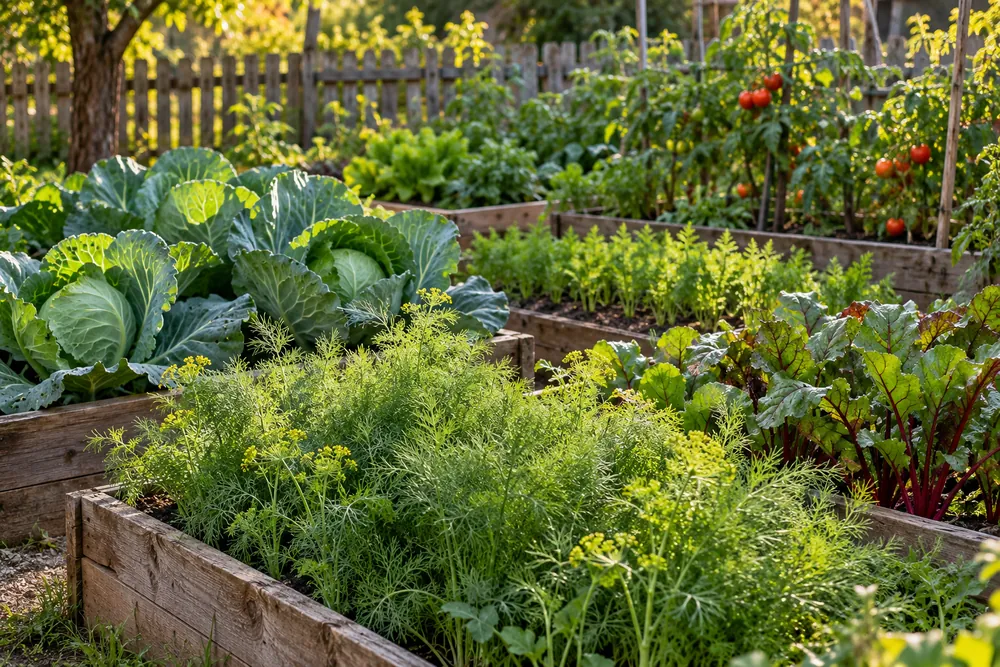
If the kitchen is your reason for gardening, begin with something you will actually reach for while cooking. Dill is a rewarding candidate for a small plot: its leaves, flower heads and seeds invite different uses, and its changing shape gives you something to notice through the growing season.
University of Minnesota Extension recommends sowing dill directly where it will grow because it does not transplant easily. Its guide calls for well-drained soil and explains the different harvest moments for green foliage and seed. This is especially useful for a beginner who might otherwise treat every part of the plant as ready at the same time.
A Polish or Ukrainian garden reference can supply cultural inspiration, but its calendar should not become a universal planting date. The Ukrainian magazine Дім, сад, город is devoted to practical household growing, while Poland’s Działkowiec speaks to allotment gardeners. Read their accounts alongside advice for your own locality, then record what your site actually does.
Our suggested kitchen experiment is simple: bring a small handful of washed dill leaves to the table with potatoes, pasteurized fresh cheese and sliced cucumber. Keep some leaves whole and chop others. Notice how much aroma you prefer before turning the experiment into a fixed recipe. The point is to grow toward your own cooking habits.
Leave space in your notebook for sowing date, emergence, first useful cutting and flowering. A sunny balcony, a sheltered urban yard and an exposed northern garden can produce very different experiences. One honest season of observations is more valuable than assuming that a familiar family herb will behave exactly as it did in another country.