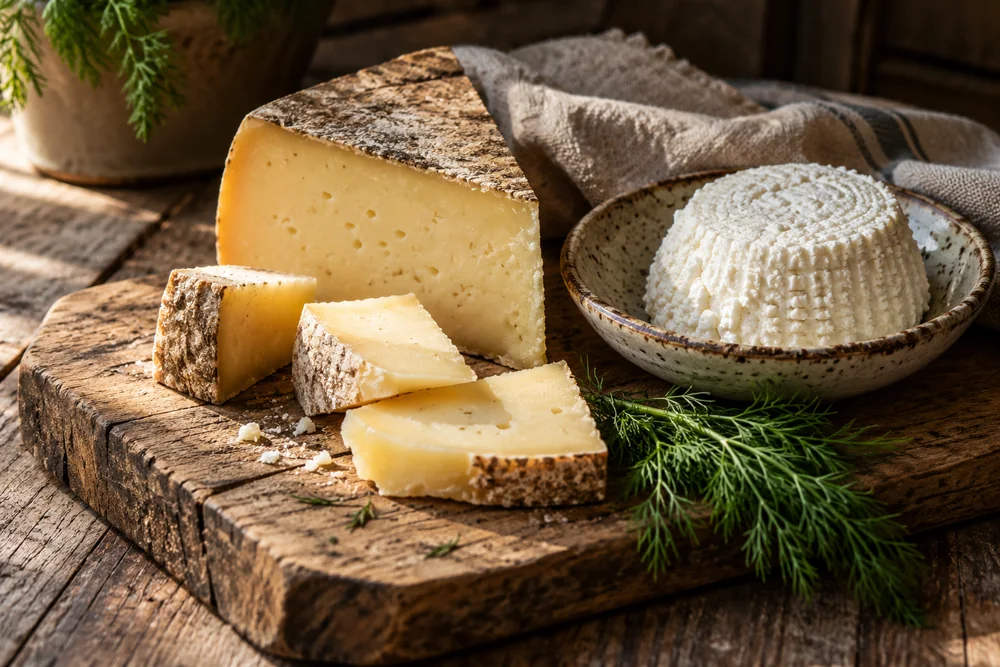
A cheese counter becomes more enjoyable when the questions get specific. Ask about the milk, the maker and the place, then about age and texture. A short conversation can turn an anonymous wedge into something you can recognize, compare and find again.
The Beaufort producer organization’s portrait of Alpage Les Arolles offers that kind of detail. It describes a small high-altitude operation making Beaufort Chalet d’Alpage, with milk from one herd and work organized around the animals and the daily making. The names and setting give the cheese a human scale that a photograph of mountains alone cannot supply.
Manchego’s protected-designation organization provides a different tool: guidance for reading the cheese itself. Its Spanish identification page explains commercial labelling, a numbered counter-label and identifying marks in the rind. It also points readers toward the milk of the Manchega sheep. Those details help distinguish a defined product from a loose resemblance or an evocative package.
For a small tasting, choose two clearly identified cheeses and ask the seller to record their names and producers. Cut modest portions and serve them separately with plain bread. Our suggestion is to compare texture before adding jam, fruit or a strong condiment. Notice whether the cheese feels elastic, crumbly, creamy or granular, and write down your own words.
You do not need to recreate a protected regional cheese to bring its lessons into your kitchen. Follow a producer’s cooking recipe, or use the cheese in a simple meal that lets it remain noticeable. If home cheesemaking becomes the next project, learn a complete fresh-cheese method first. The story of an alpine or sheep’s-milk cheese is an invitation to understand skilled work, not a promise that every detail can be reproduced in a saucepan.