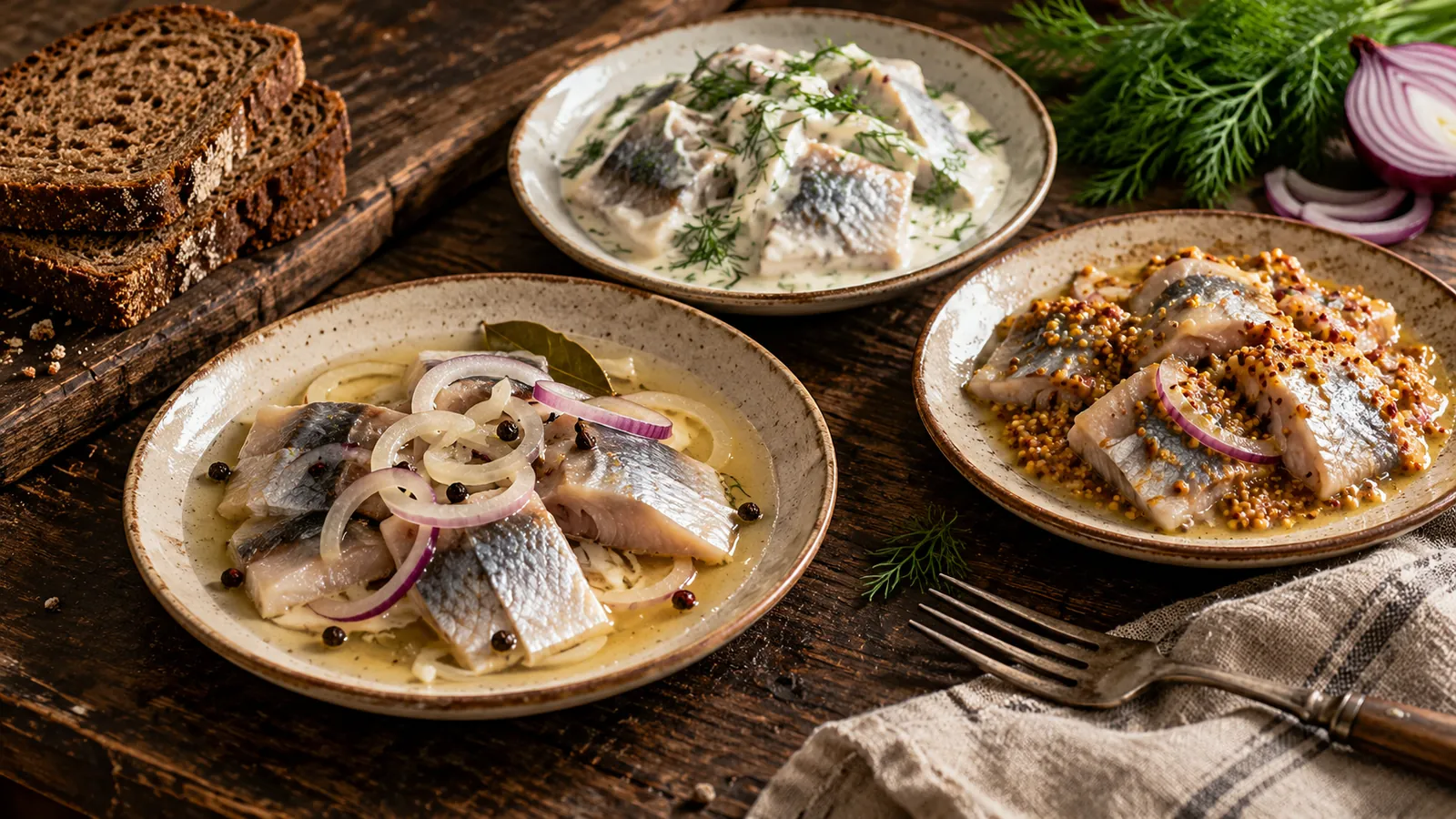
The Baltic fish counter rewards curiosity about names. Herring, sprats and smelt may all appear in the same culinary conversation, but choosing a preparation becomes easier when you first establish which fish you are buying. Local festivals and everyday snacks provide a cheerful way into those distinctions.
In Latvia, Salacgrīva’s Reņģēdāju festival celebrates a coastal herring identity. The municipal account describes the first herring boat coming ashore and the raising of the festival flag. It is a small, concrete piece of ceremony: the catch gives the community a reason to gather, trade and eat together.
Estonia’s tourism authority points to sprat sandwiches among its familiar foods and records their place at special occasions. A small open sandwich is also an approachable format for a home tasting. Let the seller identify the product and its preparation before you choose bread, egg, onion or herbs to accompany it.
On Lithuania’s coast, Palanga’s Stinta festival centres on smelt. The municipality’s published programme describes a fish fair with fried, smoked and dried preparations, as well as fish soup. The festival demonstrates why “Baltic fish” is only the beginning of a story: the species, the fishing town and the cook all add detail.
Our home version is a modest comparison plate using commercially prepared, ready-to-eat products, with each name written beside its dish. Avoid combining everything into a salad before you have tasted it. Notice the difference between smoke, salt and vinegar, and keep any product’s storage directions with it. For visitors, the linked local organizers are the right place to check future programmes; an archived festival is not a promise of next year’s dates.